Security
Helps prevent unauthorized access and allows you to separate public areas, internal areas and restricted areas.

Control who enters your building using speed gates, turnstiles, automatic gates, RFID readers, QR codes or corporate credentials, improving security, image and visitor control.
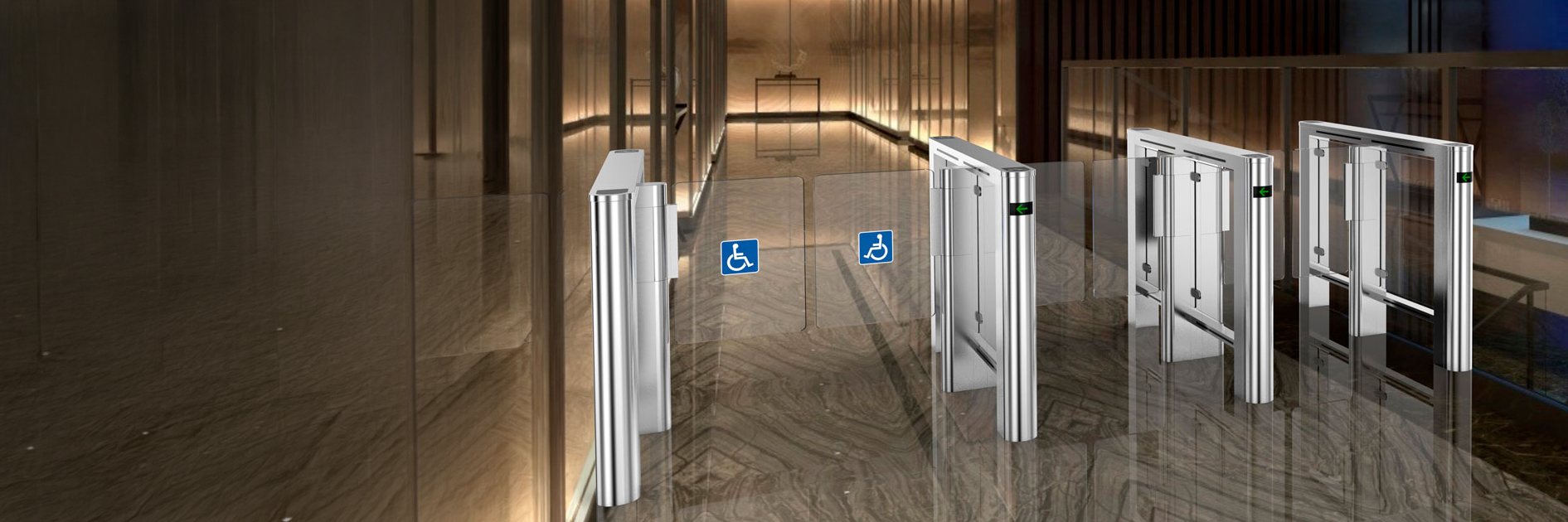
The reception is the first point of contact between employees, visitors, suppliers and internal areas of the company. An access control system helps organize that flow without turning the entrance into an uncomfortable barrier.
Helps prevent unauthorized access and allows you to separate public areas, internal areas and restricted areas.
A reception with well-integrated corridors or portholes conveys order, professionalism and control from the first contact.
Allows you to know who accesses, when they do so and using what credential, depending on the system configuration.
The key is not to block the reception, but to control the passage in a fluid, safe and consistent way with the image of the building.
Not all receptions need the same system. The number of users, the daily flow, the available space and the image of the building influence the choice.
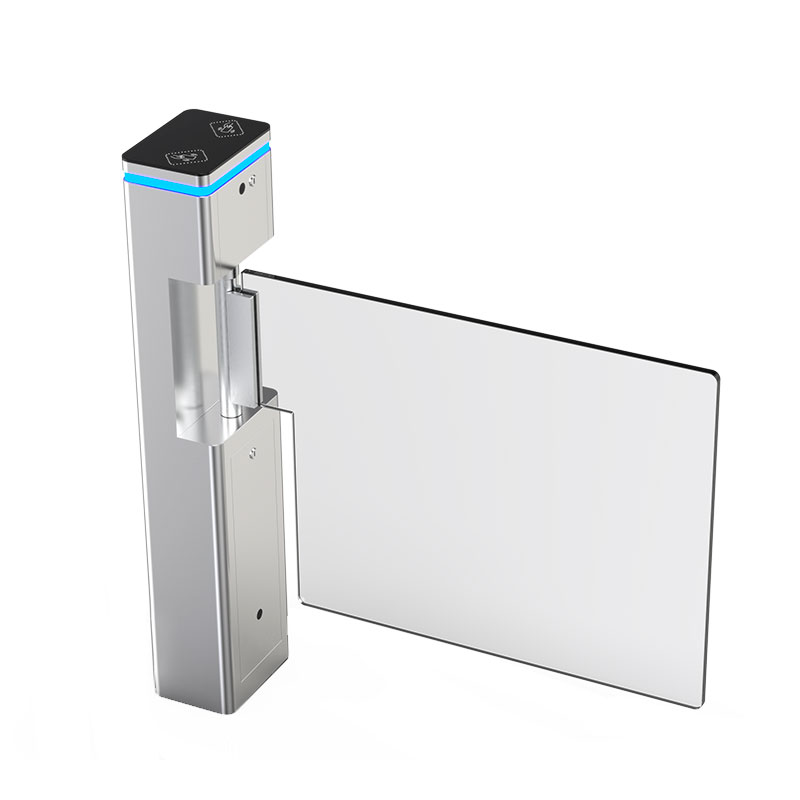
For offices with few employees or controlled visits, a combination of reader, controller and electric opening may be sufficient, or a compact gate if physical control of the passage is desired.
When the reception is a representative area of the building, speed gates allow access control while maintaining a modern image and a comfortable passage for employees and authorized visitors.
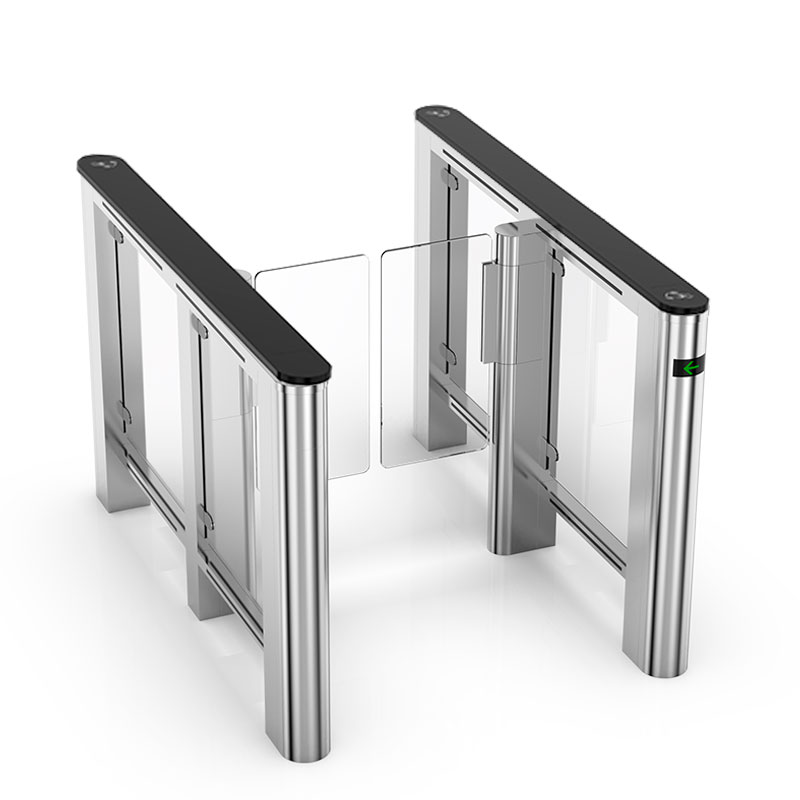
In entrances with a lot of traffic it may be necessary to combine several corridors, PMR passages, speed readers and auxiliary elements to avoid queues at peak times.
These are some of the equipment that usually fit into access control projects for receptions, corporate buildings and professional entrance areas.
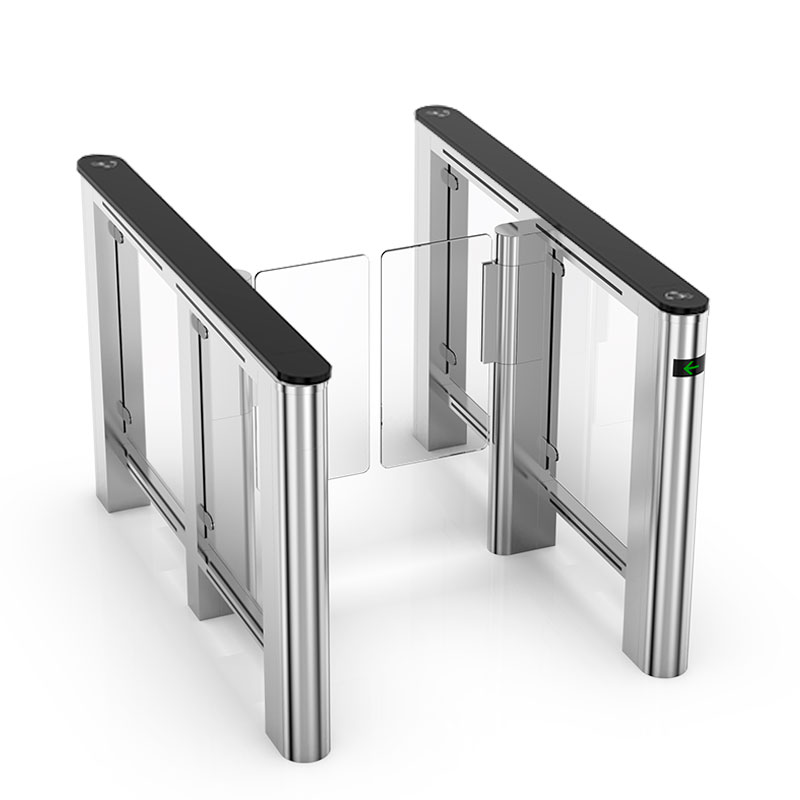
Solution indicated for corporate receptions where the aim is to control the flow with a modern, fluid and professional image.
Recommended use: Premium receptions, corporate headquarters and buildings with high employee flow.
Consult VEGA for my receptionMotorized gate to control courtesy accesses, adapted passages or areas where a wider and more comfortable opening is needed.
Recommended use: Receptions with adapted passage, secondary entrances or accesses where wide opening is required.
Consult CAPELLA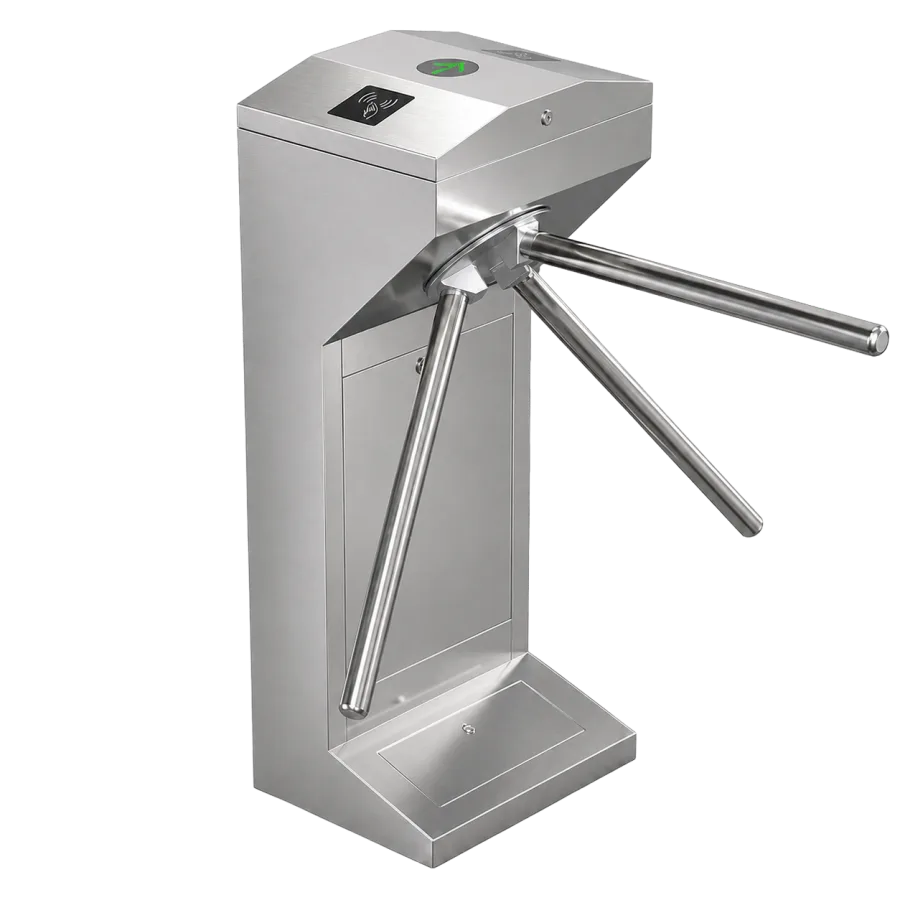
Tripod turnstile for installations where robust, compact and frequently used physical control is needed.
Recommended use: Sports centers, buildings with operational access, staff areas or entrances with functional control.
Consult CANOPUS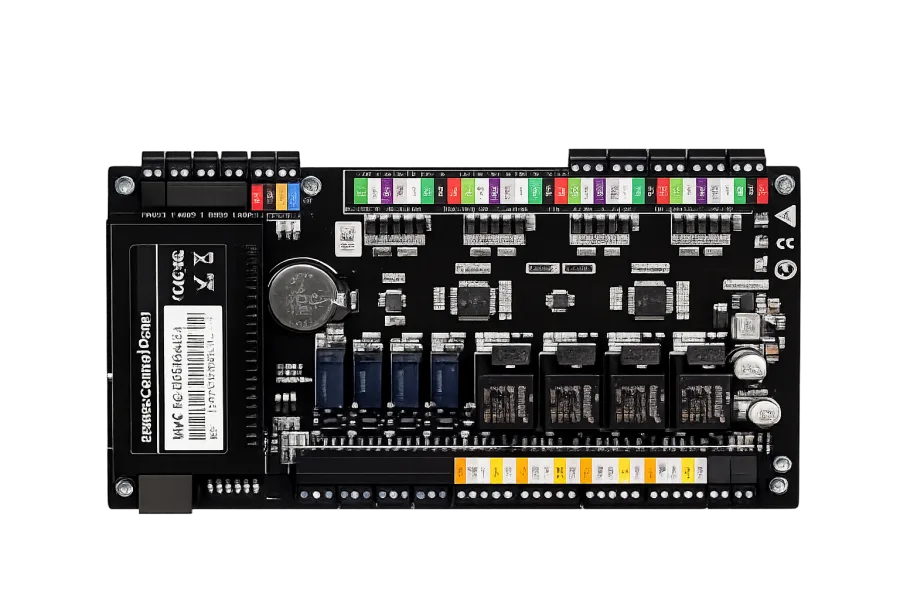
The system is completed with RFID, QR, NFC readers, biometrics or controllers that manage authorization and the opening signal.
Recommended use: Projects where there is already a door, turnstile or gate and the authorization of passage needs to be managed.
Consult readers and controllersAn initial orientation to choose the type of equipment according to the space, the flow of people and the image you want to convey.
| Solution | Best for | Image level | Flow | PMR step | Remarks |
|---|---|---|---|---|---|
| VEGA | Corporate receptions and office buildings | Very high | Medium / high | Yes, with appropriate configuration | The most representative option for premium tickets. |
| CAPELLA | Adapted passage, courtesy or auxiliary access | High | Medium | Yes | Very useful as a wide step combined with other systems. |
| CANOPUS | Compact and functional physical control | Medium | Medium | Not as a sole solution | Suitable for operational areas or accesses with less aesthetic demands. |
| Readers + controller | Existing doors or accesses without turnstile | Variable | Low / medium | Depends on the existing door | Flexible option when there is already an enclosure or door installed. |
The final configuration depends on the available width, the flow of users, the type of credential, the aesthetics of the building and the accessibility requirements.
Access control for reception is not limited to the turnstile or gate. It may also include identification, software, credentials and ancillary elements.
They allow employees, visitors or users to be identified by card, mobile phone, QR code or other systems.
Manages authorization and sends the opening signal to the turnstile, gate or door.
RFID cards, keychains, bracelets or personalized IDs for employees and visitors.
Allows you to manage users, schedules, permissions and records according to the scope of the project.
Useful for reception, security or authorized personnel when the passage needs to be manually released.
Helps organize access and meet accessibility needs at the entrance.
The operation can be adapted to the project, but normally the process follows a simple sequence.
The user presents a card, mobile phone, QR, PIN, fingerprint or face depending on the installed system.
The reader sends the information to the controller or software to check if access is authorized.
If the authorization is correct, the system releases the turnstile, hallway, gate or door.
Access can be recorded for consultation, time and attendance or traceability depending on the configuration.
It is also possible to combine access control with time and attendance, visitor management or corporate credentials.
We resolve common doubts before evaluating one configuration for corporate reception.
In reception projects it is always advisable to consider an adapted passage or an accessible alternative. The specific solution depends on the available space, applicable regulations and building configuration.
Yes, depending on the readers installed and the software used. We can assess identification using RFID cards, QR codes, NFC, PIN, biometrics or other options compatible with the project.
In some cases yes. If there is already a door, electric lock, turnstile or opening system, it is worth checking how it is installed and what type of opening signal it supports.
Yes, if the project includes controller, software or appropriate integration. The level of logging will depend on the solution installed and the configured permissions.
Yes. In many projects the same identification system can be used for physical access and time and attendance, as long as the configuration and software allow it.
We need to know the location, the available width, the type of access, the approximate number of users, the flow of people and if there is already a system installed.
Tell us what the access is like, how many people use it and what you need to control. We will help you assess an appropriate configuration before preparing a proposal.
We can guide you even if you are still not sure what equipment you need.